Product Design

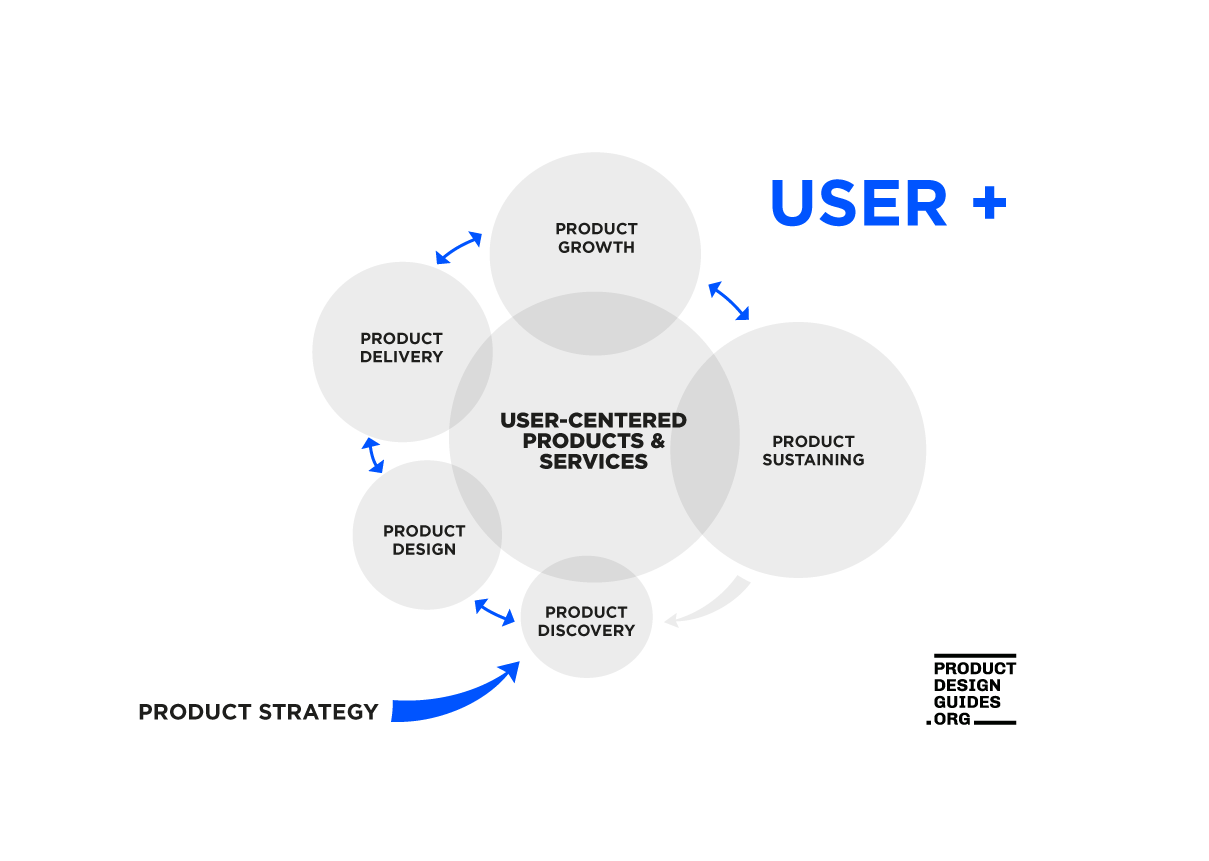
Product Design refers to the European Value Operating Model (VOM) promoted by ProductDesignGuides.org (PDGO). This model is a structured framework describing the organization, skills, practices, processes, and governance that enable product teams to effectively design, deliver, measure, and evolve products, delivering repeatable value in explicit alignment with the strategy. It is the foundation of design-driven transformation.

This guide presents the Product Design process, composed of sprints and cycles. Sprints enable efficient production within short timeframes. Cycles structure the sequence of decisions, learning, and deliveries, allowing the effectiveness of sprints to be integrated into a coherent and measurable product roadmap. Sprints and cycles are accelerators of transformation and innovation.

Each sprint or cycle is led by a team with specific skills to produce deliverables. Teams in this model operate using Scrum, Sprints, Kanban, or a hybrid approach. Product Design is, among other things, an extension of the Scrum Guide by Ken Schwaber and Jeff Sutherland.

This guide offers guidelines for collaboratively building an empowered (agile) organization to effectively deliver value to its end users.

You can develop the skills associated with this model by contacting partner training organizations.

Product Design refers to the European Value Operating Model (VOM) promoted by ProductDesignGuides.org (PDGO). This model is a structured framework describing the organization, skills, practices, processes, and governance that enable product teams to effectively design, deliver, measure, and evolve products, delivering repeatable value in explicit alignment with the strategy. It is the foundation of design-driven transformation.

This guide presents the Product Design process, composed of sprints and cycles. Sprints enable efficient production within short timeframes. Cycles structure the sequence of decisions, learning, and deliveries, allowing the effectiveness of sprints to be integrated into a coherent and measurable product roadmap. Sprints and cycles are accelerators of transformation and innovation.

Each sprint or cycle is led by a team with specific skills to produce deliverables. Teams in this model operate using Scrum, Sprints, Kanban, or a hybrid approach. Product Design is, among other things, an extension of the Scrum Guide by Ken Schwaber and Jeff Sutherland.

This guide offers guidelines for collaboratively building an empowered (agile) organization to effectively deliver value to its end users.

You can develop the skills associated with this model by contacting partner training organizations.

Product Strategy team

Objective: Embody the purpose & inspire confidence in the future. Define the strategy and facilitate its implementation

Skills

Creative leadership: embody the reason for being and bear responsibility for the strategy and its implementation.

Product leadership: guide the different teams in order to bring to market a product and/or service that maximizes value for the user.

Sprint facilitation leadership: help the organization to transform itself through collective intelligence with creative processes.

Transformation leadership: coach the organization at all levels to align it with the purpose and needs of end customers.

Team Leadership: guide, inspire and align a multidisciplinary team on the design of products centered on user needs.

Product Discovery team

Objective: Design the Minimum Viable Product (MVP) to provide value to the user: functionality and experience.

Skills

Sprint facilitation: facilitate each of the team's sprints and workshops to produce the deliverables.

Product discovery leadership: guide the team to identify problem-solution and product-market fits.

User research: identify key insights, jobs-to-be-done of users of the future product.

Design thinking: iterate to find the value proposition of an area of ​​innovation.

CSR strategy design: define the CSR strategy of an organization, a product or a service.

Business model design: iterate to find the business model that creates value for everyone.

Brand design: create or improve the brand.

Product Design team

Objective: Design the Minimum Viable Product (MVP) to provide value to the user: functionality and experience.

Skills

Sprint facilitation: facilitate each of the team's sprints and workshops to produce the deliverables.

Product design leadership: guide the team to deliver an MVP that meets the needs of users and the organization.

UX research: analyze user needs and behaviors to improve the product experience.

UX design: analyze, design, and test digital journeys for a seamless experience.

Service design: create a user journey, digital included, without friction and with waouh moments.

UI design: create intuitive, attractive, and consistent visual interfaces to facilitate the user.

Copy writing: write captivating, clear and persuasive texts to engage and convert the audience.

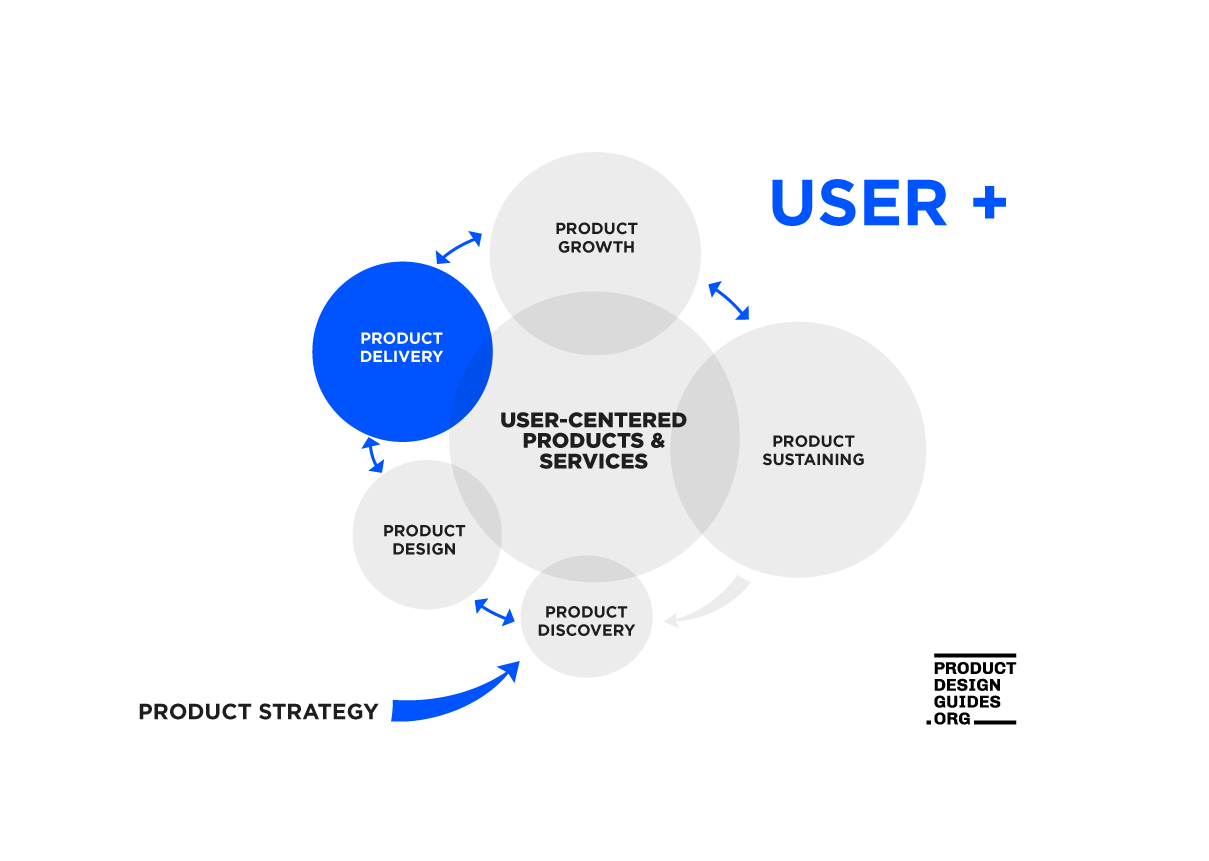
Product Delivery team

Objective: Develop the Minimum Viable Product (MVP) quickly and reliably.

Skills

Scrum facilitation: facilitate the development sprint with the Scrum framework or other.

Scrum/Kanban: manage priorities, tasks, workflows and collaboration in continuous cycles.

No-code: quickly design, automate and deploy digital solutions without complex programming.

AI/SWdevelopment: design, develop and deploy intelligent, software and scalable systems using AI.

Product ownership: prioritize, plan and coordinate product development, aligning user needs and strategic objectives.

DevOps: automate, integrate and optimize processes between development and operations for continuous and reliable delivery.

Product Growth team

Objective: Scale as quickly as possible. Build the proven viable organization while constantly improving product-market fit.

Skills

Outbound marketing: actively attract prospects through targeted advertising, emails, calls or external events.

Inbound marketing: attract, engage and convert prospects through relevant content, SEO,and digital strategies.

Growth hacking: use creative, analytical and low-cost techniques to quickly drive growth.

Comm creativity: design original and impactful messages that capture attention and inspire engagement.

Product Sustaining Team

Objective: Optimize the organization at the center of the client. Reinforce the organization across cycles.

Skills

Meeting design: structure and facilitate effective meetings, focused on goals, collaboration and decision-making.

Codev facilitation: guide groups to solve complex problems, stimulate collaboration, and generate creative solutions.

Training design: design engaging training programs, tailored to identified needs, objectives and target audiences.

Circle facilitation: facilitate meetings with shared governance, inclusive, equitable and collaborative, promoting active listening and collective decision-making.

Publicspeaking: communicate clearly and effectively in front of an audience, captivating and engaging the audience with confidence.

Download

You will receive an email with the DesignGuide in the chosen language.

By entering your email, you agree that the organization will process your data in order to regularly send you information and articles concerning transformation by design (legal basis: consent).

Thank you! Your submission has been received!
Oops! Something went wrong while submitting the form.

Improvement proposal

If you want to suggest improvements, you are very welcome to do it with the contact form.